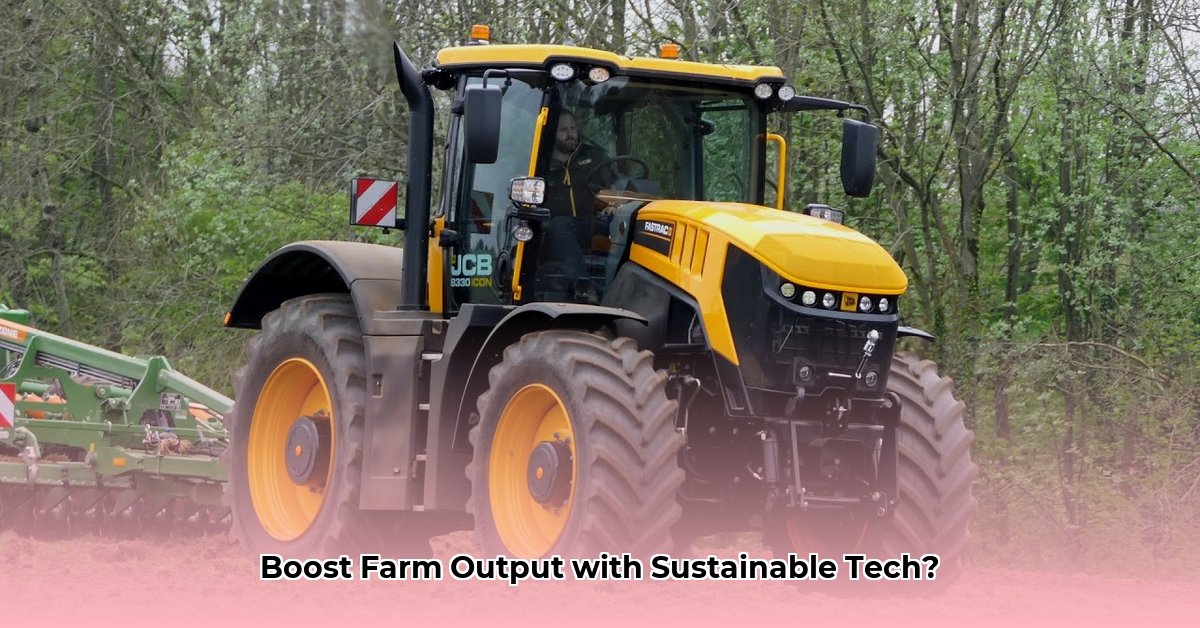
The JCB Fastrac tractor represents a significant advancement in agricultural technology, promising increased efficiency and environmental sustainability. Its innovative design and features are sparking considerable interest, particularly regarding its potential to enhance crop yields while minimizing environmental impact. This review examines the key aspects of the Fastrac, exploring its benefits and limitations within the context of sustainable agriculture. For comparison, see other tractor models here.
Superior Suspension: Minimizing Soil Compaction for Healthier Crops
A defining characteristic of the Fastrac is its full suspension system, encompassing both front and rear axles. This advanced suspension system directly addresses the significant issue of soil compaction. Reduced soil compaction, achieved through the smoother ride provided by the suspension, allows for improved root penetration, leading to healthier and more productive plants. This minimizes the need for additional fertilizers and soil amendments, thereby contributing to reduced input costs and environmentally friendly farming practices. Furthermore, the enhanced traction resulting from the suspension system translates to less wheel slippage, contributing to improved fuel efficiency and increased daily output.
High-Speed Operation: Maximizing Acreage Coverage and Productivity
Fastrac tractors are capable of achieving impressive speeds—some models exceeding 43 mph. While the potential for increased acreage coverage per day is apparent, the impact on overall fuel efficiency at these higher speeds requires further investigation. Currently, data on fuel consumption at various speeds across different terrains is limited. Further research is needed to definitively determine the net benefit in terms of productivity gains versus increased fuel usage. Preliminary findings suggest potential advantages; however, comprehensive data is crucial for a conclusive assessment. Ongoing field studies are actively exploring this critical aspect.
Enhanced Maneuverability: Optimizing Field Operations
The Fastrac’s near 50/50 weight distribution contributes significantly to its superior maneuverability. This feature is especially advantageous in confined spaces, around obstacles, or in irregularly shaped fields. Improved maneuverability translates directly into reduced operational time and lower fuel consumption, ultimately increasing efficiency and cost savings. This increased agility can significantly impact labor costs and overall farm profitability.
Total Cost of Ownership (TCO): A Holistic Economic Analysis
While the Fastrac offers significant potential benefits, the substantial initial investment necessitates a comprehensive evaluation of its total cost of ownership (TCO). The TCO extends far beyond the initial purchase price and encompasses a range of ongoing expenses, including:
- Depreciation: The gradual loss of value over time.
- Maintenance: Routine servicing and potential repairs.
- Fuel: Costs directly proportional to usage and operating conditions.
- Insurance: Premiums for insuring the equipment.
- Taxes and Licensing: Varied regionally; these must be factored.
- Repairs: Unforeseen breakdowns and associated repair costs.
A detailed TCO analysis is crucial for farmers to determine the long-term economic viability of the Fastrac relative to other tractors. Factors such as farm size, operational intensity, and prevailing economic conditions directly influence the overall ROI. The following table summarizes the economic factors affecting different stakeholders:
| Stakeholder | Short-Term Considerations | Long-Term Considerations |
|---|---|---|
| Large Farms | ROI assessment; speed & efficiency gains. | Fleet optimization; strategic integration of Fastrac tractors. |
| Small Farms | Leasing options; shared ownership models. | Long-term cost savings vs. upfront investment. |
| Equipment Dealers | Specialized Fastrac technician training. | Customized service packages for this specialized tractor. |
| Agricultural Researchers | Field trials measuring fuel savings and productivity. | Long-term environmental impact assessment of Fastrac usage. |
| Government Agencies | Incentives for fuel-efficient technology adoption. | Infrastructure investment for high-speed farm transport. |
Sustainability: A Comprehensive Life Cycle Assessment
Sustainability extends beyond fuel efficiency. A complete assessment requires a comprehensive life cycle assessment (LCA) encompassing the entire lifespan of the Fastrac, from manufacturing and operation to eventual disposal. While reduced soil compaction is a significant environmental benefit, a full LCA is crucial for a complete understanding of its overall environmental footprint. Currently, data on fuel consumption across diverse operating conditions is lacking, and more research is needed to create an accurate picture.
Conclusion: A Promising Technology Requiring Further Research
The JCB Fastrac offers considerable potential advantages, particularly in terms of improved efficiency and reduced soil compaction. However, several key questions remain regarding its long-term economic and environmental sustainability. The limited available data on fuel efficiency and long-term operational costs necessitates substantial further research before a definitive conclusion on the suitability of the Fastrac for various farming operations can be reached. The long-term sustainability of the investment and potential ROI must be carefully analyzed before firm conclusions can be drawn. The potential is considerable, but further investigation is critical.